Pipelined RISC-V Processor
A 32-bit, five-stage pipelined RISC-V CPU with a branch predictor, written in SystemVerilog and running on an FPGA.
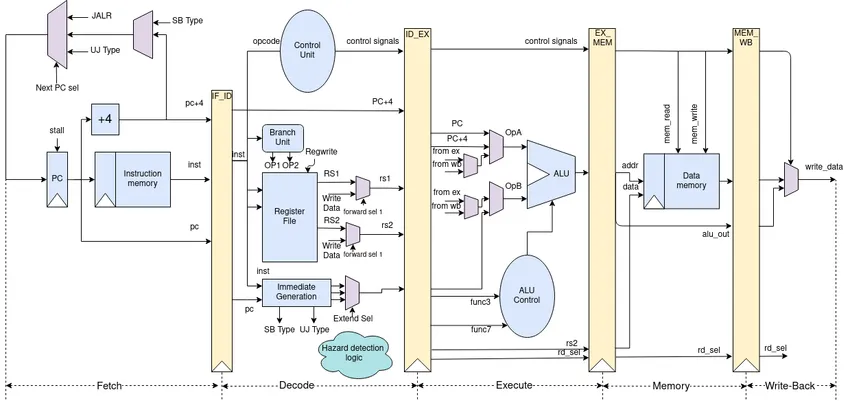
This processor was the final project of Cal Poly’s three-course computer design sequence. Over the sequence I went from logic gates to a working CPU: a 32-bit RISC-V core (the “OTTER”) with a five-stage pipeline and a branch predictor, synthesized onto a Xilinx FPGA.
What it took
- Digital design. Building the datapath from basic logic, with control written as finite-state machines.
- Architecture. Pipelining, and the data and control hazards it creates: forwarding, stalls, and branch prediction to keep the pipeline full.
- Verification. Simulating and testing every component in SystemVerilog before it ever touched hardware.
- Software. Writing and debugging RISC-V assembly, and C benchmarks (matrix multiply and add) to measure the finished core.
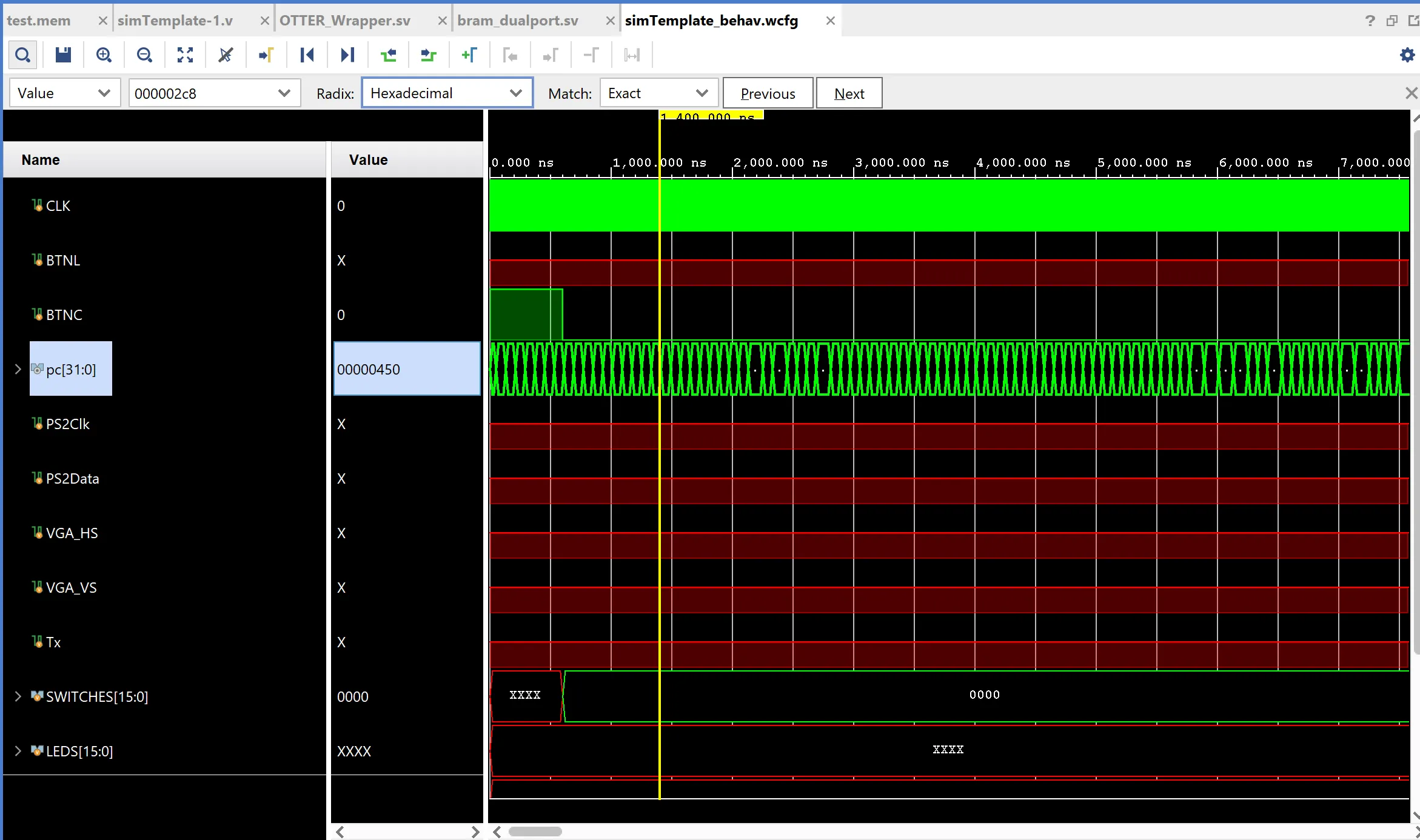 Simulation waveform used to verify the pipeline’s timing.
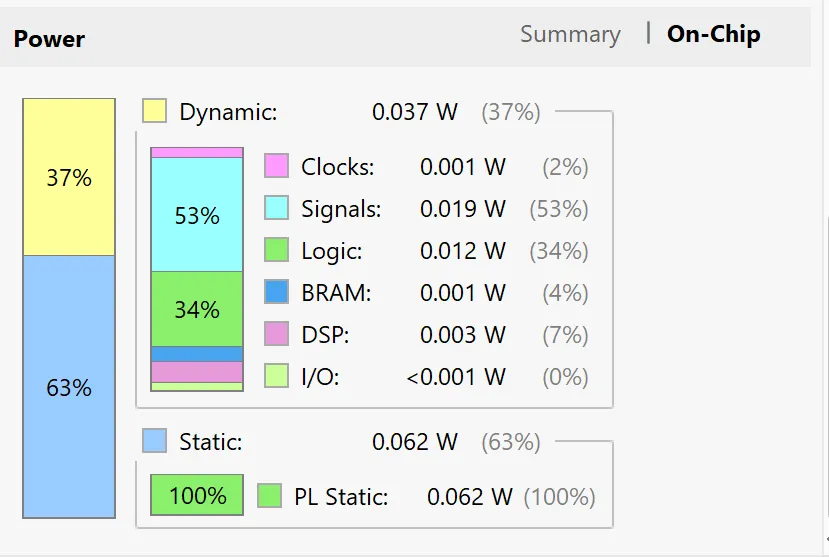 Power report for the design on the FPGA.